
Understanding Stalking Laws in Michigan
Stalking laws in Michigan are designed to protect individuals from repeated unwanted behavior that causes fear, emotional distress, or intimidation. Michigan law recognizes that stalking can occur in person, through electronic communications, by following someone, making repeated unwanted contact, monitoring activities, or engaging in other persistent conduct that creates a reasonable fear of harm.
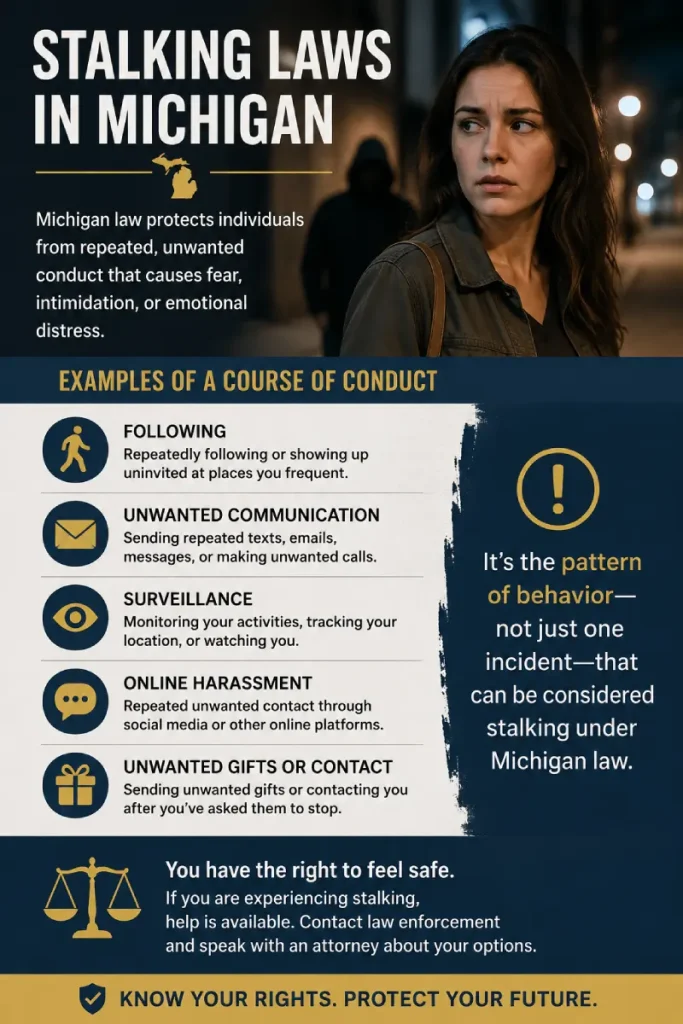
Unlike a single unpleasant interaction, stalking generally involves a pattern of repeated behavior. Courts often evaluate the entire course of conduct instead of focusing on one isolated incident.
Michigan’s stalking statutes aim to balance public safety with constitutional protections while providing legal remedies for victims through both criminal prosecution and civil protective orders.
What Is Legally Considered Stalking?
Michigan law generally defines stalking as a pattern of unwanted harassment that would cause a reasonable person to feel terrorized, frightened, intimidated, threatened, harassed, or emotionally distressed.
Several elements commonly appear in stalking investigations:
- Repeated unwanted contact
- Following or monitoring another person
- Persistent communication after being told to stop
- Threatening behavior
- Actions causing reasonable emotional distress
- Conduct occurring over time rather than as a single event
Whether conduct qualifies as stalking depends on the specific facts of each case. Investigators, prosecutors, and courts examine the frequency of the conduct, its context, available evidence, and its impact on the alleged victim.
Course of Conduct
A “course of conduct” generally refers to a series of separate actions that demonstrate repeated harassment. Examples may include:
- Following someone to work
- Waiting outside a residence
- Sending repeated unwanted text messages
- Repeated phone calls
- Monitoring social media activity
- Appearing unexpectedly at multiple locations
- Delivering unwanted gifts after requests to stop
The pattern is often more important than any individual act.
Harassment Explained
Harassment may include conduct directed at a specific person that is repeated and serves no legitimate purpose. The behavior must generally be more than merely annoying. Instead, it typically involves actions that would cause a reasonable individual to experience significant fear or emotional distress.
Examples may include:
- Constant surveillance
- Unwanted communication
- Repeated appearances
- Persistent intimidation
- Threatening messages
Not every disagreement, argument, or isolated unwanted interaction automatically constitutes criminal stalking.
Types of Stalking Offenses
Michigan distinguishes between different levels of stalking offenses depending on the circumstances.
Simple Stalking
Simple stalking generally involves repeated harassment meeting the statutory definition without additional aggravating circumstances. Depending on the facts, prosecutors may pursue misdemeanor charges.
Aggravated Stalking
Aggravated stalking involves additional factors that increase the seriousness of the offense. These circumstances may include violating a court order, making credible threats, having prior qualifying convictions, or engaging in other conduct specified by law. Aggravated stalking can result in substantially more severe criminal penalties.
Cyberstalking and Online Harassment
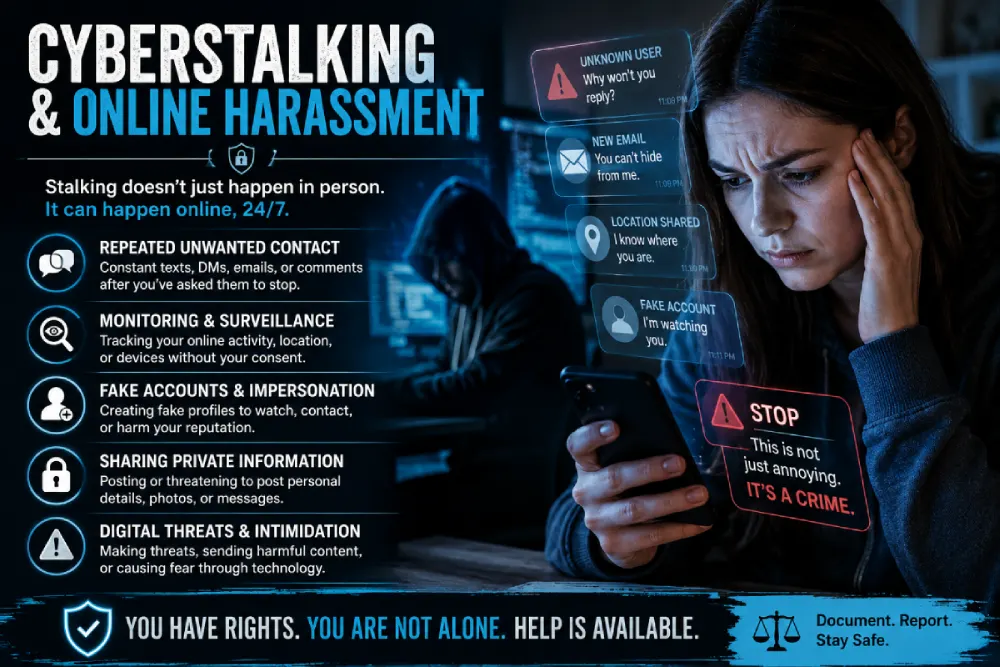
Technology has changed how stalking occurs. Modern cases frequently involve digital communication rather than physical following.
Examples include:
- Repeated unwanted emails
- Social media harassment
- Fake online profiles
- GPS tracking
- Monitoring online activity
- Repeated direct messages
- Sharing private information without consent
- Using multiple accounts to continue unwanted contact
Electronic evidence such as screenshots, emails, text messages, call logs, and account records often becomes important during investigations.
Criminal Penalties
Penalties depend on the specific offense, prior criminal history, and aggravating circumstances.
Potential consequences may include:
- Jail or prison sentences
- Probation
- Criminal fines
- Mandatory counseling
- No-contact conditions
- Restitution
- Permanent criminal record
Judges consider numerous factors during sentencing, including the seriousness of the conduct and the defendant’s criminal history.
Personal Protection Orders (PPOs)
Individuals experiencing stalking may be able to seek a Personal Protection Order (PPO). A PPO can prohibit certain conduct, including:
- Contacting the protected person
- Following or approaching them
- Appearing at specified locations
- Sending communications
- Harassing through third parties
Violating a valid court order can result in additional legal consequences beyond the underlying stalking allegations.
Evidence Used in Stalking Cases
Successful investigations often rely on detailed documentation.
Helpful evidence may include:
- Text messages
- Emails
- Voicemails
- Security camera footage
- Witness statements
- GPS records
- Social media posts
- Photographs
- Call logs
- Police reports
- Medical or counseling records documenting emotional distress
Keeping a chronological log of incidents can also help establish a pattern of conduct.
Rights of Victims
Michigan provides several legal protections for individuals who believe they are being stalked. While every situation is unique, victims have important rights throughout the criminal justice process.
These rights may include:
- Reporting suspected stalking to local law enforcement.
- Requesting an investigation into repeated harassment.
- Seeking a Personal Protection Order (PPO) when legally appropriate.
- Being informed about significant developments in a criminal case.
- Requesting restitution in eligible cases.
- Accessing victim assistance programs that provide information, referrals, and support.
Victims should consider documenting every incident, including dates, times, locations, witnesses, and copies of communications. Detailed records can help investigators establish a pattern of conduct if criminal charges or civil proceedings become necessary.
If there is an immediate threat to personal safety, contacting emergency services should always be the first priority.
Possible Legal Defenses
Every criminal case is different, and a person accused of stalking has the right to legal representation and to challenge the prosecution’s evidence. Common defenses depend on the facts of the case and may include:
Lack of Intent
The accused may argue that the conduct was misunderstood or lacked the intent required by law.
No Course of Conduct
Because stalking generally involves repeated actions, the defense may argue that the alleged behavior consisted of isolated incidents rather than a legally sufficient pattern.
Legitimate Purpose
Certain communications or interactions may have a lawful or legitimate reason, such as business, family, or legal matters. Whether this defense applies depends on the circumstances.
Mistaken Identity
Digital communications, anonymous accounts, or conflicting witness testimony may raise questions about who actually engaged in the alleged conduct.
Insufficient Evidence
Criminal charges generally require proof beyond a reasonable doubt. The defense may challenge the reliability of witness statements, electronic evidence, or other proof presented by the prosecution.
Only a court can determine whether a defense is legally valid in a particular case.
Reporting Stalking to Law Enforcement
If someone believes they are being stalked, reporting the conduct promptly can help preserve evidence and improve the chances of an effective investigation.
Helpful steps may include:
- Save all text messages, emails, voicemails, and social media communications.
- Take screenshots before online content is deleted.
- Keep a written timeline of every incident.
- Preserve surveillance footage if available.
- Identify potential witnesses.
- Avoid responding to threatening communications unless advised otherwise by law enforcement or legal counsel.
- File a police report and provide as much documentation as possible.
Investigators may review electronic devices, interview witnesses, obtain surveillance footage, and collect digital records when appropriate.

Preventing Stalking
Although victims are never responsible for another person’s criminal behavior, certain practical safety measures may reduce risk and help document unwanted conduct.
Consider:
- Reviewing privacy settings on social media accounts.
- Limiting the amount of personal information shared online.
- Changing passwords and enabling multi-factor authentication.
- Informing trusted friends, family members, or coworkers about the situation.
- Varying daily routines if safety is a concern.
- Installing security cameras or improved exterior lighting where appropriate.
- Keeping copies of all evidence in a secure location.
- Seeking legal advice regarding protective orders if necessary.
Safety planning may also involve working with local victim advocacy organizations that specialize in assisting individuals experiencing stalking or harassment.
Common Misconceptions About Stalking Laws in Michigan
Many people misunderstand how stalking laws work. Here are a few common misconceptions:
“One unwanted message is automatically stalking.”
Generally, no. A single communication, while potentially inappropriate or unlawful under other statutes, does not automatically satisfy the legal requirements for stalking.
“Only former romantic partners can stalk someone.”
No. Alleged stalkers may include acquaintances, neighbors, coworkers, classmates, strangers, family members, or others, depending on the circumstances.
“Stalking must involve physical following.”
Not necessarily. Modern stalking investigations frequently involve electronic communications, social media activity, GPS tracking, and other forms of digital monitoring.
“If there are no threats, it cannot be stalking.”
Not always. Repeated conduct causing reasonable fear or emotional distress may still violate the law even if no explicit threat is made, depending on the facts and applicable statutes.
Are You A Victim of Stalking? Contact Us
Navigating stalking allegations or seeking protection from stalking can be overwhelming, but understanding your legal rights is the first step. Michigan’s stalking laws are designed to address repeated harassment and protect individuals from conduct that causes fear, intimidation, or emotional distress. Whether you are seeking a Personal Protection Order, reporting stalking to law enforcement, or defending against stalking allegations, having experienced legal guidance can make a significant difference.
At Birka Law, we understand that every case is unique and deserves personalized attention. Our team is committed to helping clients understand their options, protect their rights, and pursue the best possible outcome. We take the time to listen to your concerns, explain the legal process, and develop a strategy tailored to your specific circumstances.
If you or a loved one is dealing with a stalking-related legal matter in Michigan, don’t face it alone. Contact us today to schedule a free consultation. We’ll review your situation, answer your questions, and help you understand the legal options available to you so you can move forward with confidence.
Disclaimer: This article is for general informational and educational purposes only and does not constitute legal advice. Laws may change, and their application depends on the facts of each case. For advice about a specific legal matter, please reach out to us directly.


